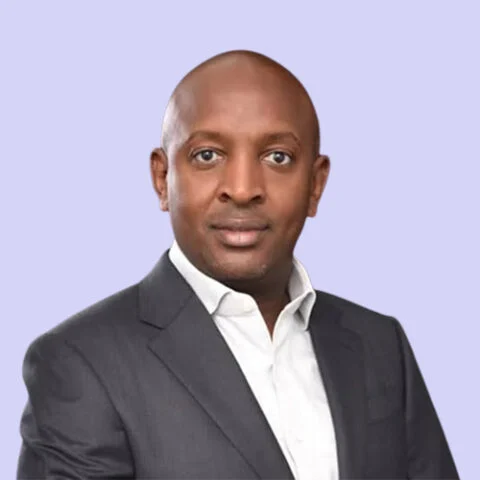
Between January 1, 2013, and October 31, 2018, Andrew Biketi Musuya rapidly amassed assets valued at KSh 289,932,910.
According to EACC, Musuya, a former public accountant who worked for the Ministry of Public Health and Sanitation and later served as a senior accountant for the Trans Nzoia County Government, was earning a monthly salary of just KSh 100,000 to KSh 129,000 at the time.

On October 24, 2018, following intelligence on a fraudulent scheme involving inflated and fictitious contracts, a Duty Judge granted the Ethics and Anti-Corruption Commission (EACC) initial 6-month investigative and freeze orders.
On March 24, 2019, Justice John Onyiego quietly issued orders freezing Musuya’s accounts at Equity Bank and Co-operative Bank, which were hold a combination of KSh 15.7 million.On March 28, 2019, EACC Chief Executive Twalib Mbarak formally issued a statutory 7-day demand notice to Musuya.
The letter officially warned Musuya to explain the massive disproportion between his multi-million shilling asset portfolio and his known monthly public salary. On June 20, 2019, the EACC mapped how Musuya, using a proxy (Mildred Kerubo Obare) channelled KSh 177.7 million through briefcase companies.Following the discovery of the fraud, the EACC escalated the case into a full civil forfeiture suit. According to EACC reports, Mildred Kerubo Obare, a 46-year-old clothes trader, was used as a front by Musuya.
The EACC used the Integrated Financial Management Information System (IFMIS) to unmask six distinct briefcase entities registered under her details.

Between January 2013 and November 2018, these entities collectively received KSh 177,780,789.10 from the Trans Nzoia County Government. • Nyansha Enterprises: Siphoned KSh 49.9 million.• Finewood Enterprises: Siphoned KSh 47.9 million.• Valuda Enterprises: Siphoned KSh 27.6 million.• Girlful Enterprises: Siphoned KSh 21.3 million.• Handprint Enterprises: Siphoned KSh 16.4 million.• Culent Logistics: Siphoned KSh 15.5 million.Musuya didn’t just passively look for loopholes, he was positioned to create them.
During the 2014-2015 financial year, he was appointed to the County Procurement Committee, giving him direct authority to approve tenders valued at KSh 500,000 and below.
This positioning allowed him to splinter large budgets into micro-contracts and feed them directly into Obare’s entities without triggering standard regulatory audits.
As a principal finance officer and accountant inside the Treasury, Musuya held the required system user credentials and clearance codes to interact with the Integrated Financial Management Information System (IFMIS).
Once the split supply contracts were awarded on paper, Musuya utilized his administrative authority to input, process, and authorize the local purchase orders (LPOs) and corresponding payment vouchers directly in IFMIS.
The entire proxy scheme began collapsing when Musuya tried to distance himself from a KSh 5.6 million Toyota Prado acquired in 2015. He insisted he did not own it, pointing to registration details bearing Obare’s name.
However, EACC investigators tracked down the vehicle supplier, a Pakistani car dealer named Ahmed Iftikhar. Iftikhar testified that Musuya physically paid for the vehicle in cash—splitting the total into two rapid installments of KSh 3 million and KSh 2.6 million in less than three hours.
He noted that while Obare’s name was typed onto the sale agreement, she never physically appeared to pay for or pick up the car.
When cross-examined by anti-graft detectives, Obare turned state witness against the scheme, confessing that she had never financed, owned, or even seen the luxury vehicle.
She admitted that Musuya merely harvested her identification details to register the vehicle and incorporate the multi-million shilling briefcase entities to channel county funds back into his possession.